
What Is an ID Fan and Why Is It Important in Industrial Boilers
In any industrial boiler system, combustion is only as efficient as the airflow that supports it. Too little air and the fuel does not burn completely, wasting energy and producing harmful emissions. Too much air and heat escapes unnecessarily through the flue. Maintaining the precise balance of airflow through a boiler is not left to chance – it is controlled by a critical piece of equipment called the Induced Draft Fan, or ID Fan.
Despite being one of the most important components in any boiler setup, the ID fan is often overlooked until something goes wrong. This guide explains what an ID fan is, how it works, why it matters for boiler efficiency, and what to look for when selecting one for your plant.
What Is an ID Fan?
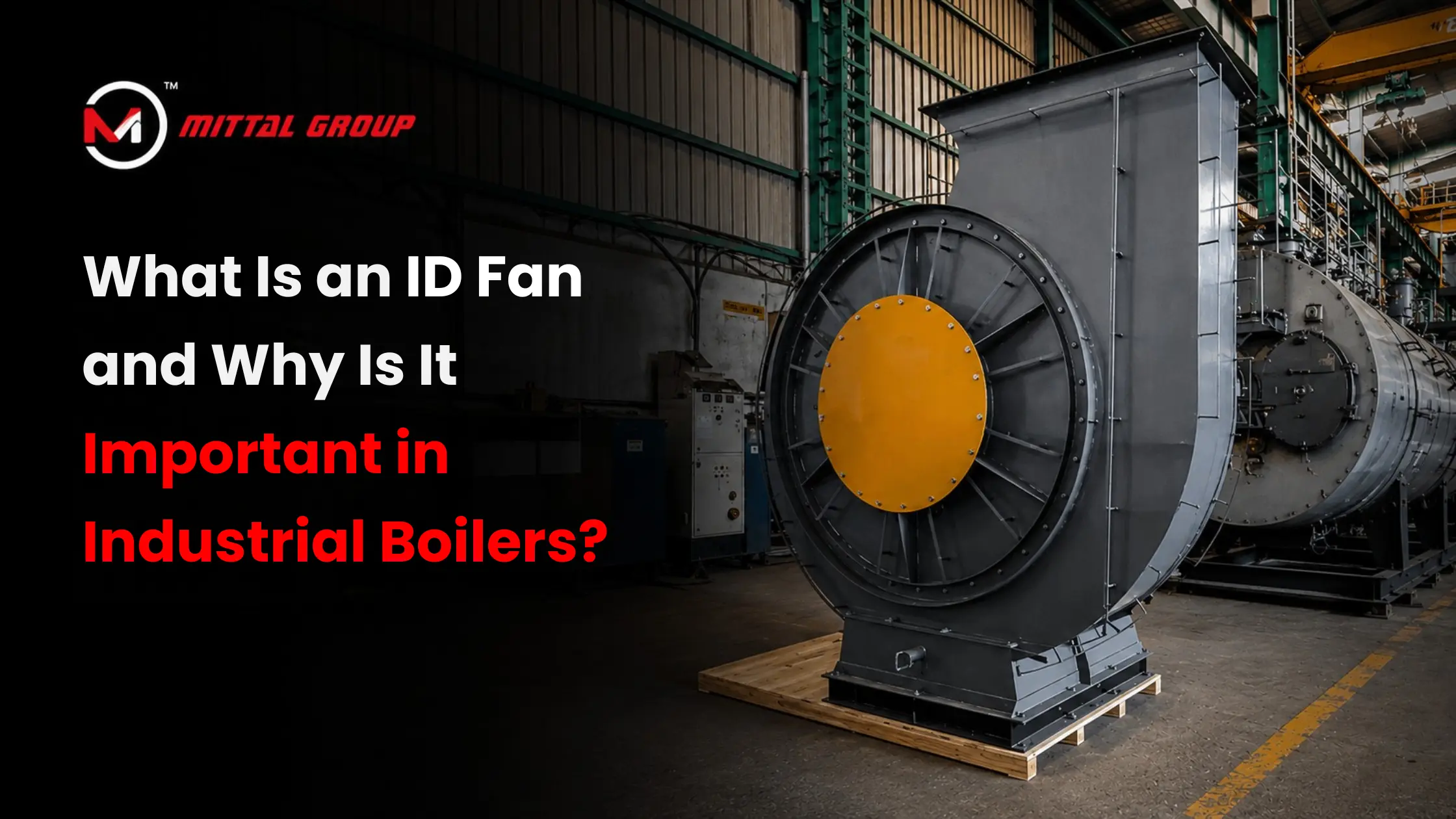
An Induced Draft (ID) Fan is a mechanical fan installed at the exhaust end of a boiler system, typically between the dust collector or economiser and the chimney stack. Its primary job is to draw combustion gases (flue gases) out of the boiler furnace and push them through the flue gas treatment system before releasing them through the stack.
The term “induced” refers to the fact that the fan creates a negative pressure (suction) within the furnace, which pulls air and combustion gases through the system rather than pushing them in. This suction effect is what maintains the proper draft conditions inside the boiler.
ID fans are commonly used in:
- Coal-fired and biomass boilers
- Thermal power plants
- Cement and steel manufacturing plants
- Chemical and petrochemical processing units
- Paper and pulp industries
How Does an ID Fan Work in a Boiler System?
To understand how an ID fan works, it helps to understand the complete draft system of a boiler. A boiler’s combustion process requires a continuous, controlled supply of air and the efficient removal of exhaust gases. This is managed through what is called the draft system.
Here is the step-by-step flow in a typical induced draft boiler system:
- The FD Fan (Forced Draft Fan) pushes fresh air into the furnace for combustion
- Fuel burns inside the furnace, generating heat and flue gases
- Hot flue gases pass through the superheater, economiser, and air preheater
- Gases enter the dust collector or bag filter for emission control
- The ID Fan draws all these gases through the system and pushes them up the chimney stack
The ID fan operates under negative pressure conditions and handles hot, dusty, and often corrosive flue gases – which is why its material construction and blade design are critical engineering decisions.
Why Is the ID Fan Critical for Boiler Efficiency?
The ID fan directly controls the furnace draft – the negative pressure inside the combustion chamber. If the draft is too low, flue gases accumulate inside the furnace, choking combustion and reducing efficiency. If the draft is too high, excess cold air gets pulled in, cooling the furnace and wasting fuel.
A properly sized and well-maintained ID fan ensures:
- Complete combustion of fuel – reducing unburnt losses
- Stable furnace pressure – preventing backdraft or pressure fluctuations
- Efficient heat transfer across all boiler passes
- Lower stack emissions – critical for pollution control compliance
- Safe plant operation – prevents dangerous gas buildup in the furnace
ID Fan vs FD Fan: What Is the Difference?
To understand how ID fans and FD fans work together in a boiler system, read our detailed comparison: ID Fan vs FD Fan – Key Differences Explained.
Key Components of an Industrial ID Fan
An industrial ID fan is not a single part – it is an engineered assembly of several components, each serving a specific function:
- Impeller / Rotor: The rotating blades that generate airflow. Blade design (backward curved, forward curved, radial) directly affects efficiency and dust-handling ability.
- Casing / Housing: The outer shell that encloses the impeller and guides airflow to the outlet. Must be robust enough to handle high temperatures and abrasive particles.
- Shaft: Connects the impeller to the drive system. Must be precision-balanced to prevent vibration at high RPMs.
- Bearings: Support the rotating shaft. In ID fans, heavy-duty, high-temperature bearings are used to withstand demanding operating conditions.
- Inlet Box / Damper: Controls the volume of gas entering the fan. Variable inlet dampers allow speed and flow control without changing motor RPM.
- Drive System: Typically a direct-drive motor or belt-and-pulley arrangement. VFD (Variable Frequency Drive) systems are increasingly used for energy savings.
Looking for High-Performance ID Fans for Industrial Boilers?
Mittal Blowers manufactures high-performance industrial ID fans engineered for demanding boiler applications across power, cement, steel, and process industries.
Common Problems with ID Fans and How to Prevent Them
Because ID fans operate in harsh conditions – high temperatures, dusty flue gases, and continuous duty cycles – they are susceptible to specific failure modes. Early detection and preventive maintenance can avoid costly unplanned shutdowns.
Blade Erosion and Wear
Abrasive fly ash and dust particles in the flue gas continuously erode impeller blades over time. Prevention: use wear-resistant alloy blades or apply hard-facing coating. Inspect blades every scheduled maintenance cycle.
Vibration and Imbalance
Dust buildup on impeller blades causes dynamic imbalance, leading to excessive vibration and bearing damage. Prevention: regular cleaning of impeller, vibration monitoring sensors, and precision dynamic balancing after any repair.
Bearing Failure
Overheating, inadequate lubrication, or vibration-induced fatigue leads to bearing failure. Prevention: follow manufacturer lubrication schedules, use temperature-rated grease, and install bearing temperature monitors.
Corrosion of Casing
Acid dew point corrosion occurs when flue gas temperature drops below the sulfuric acid dew point, causing acidic condensate to attack the casing. Prevention: maintain outlet gas temperature above dew point; use corrosion-resistant linings where necessary.
How to Choose the Right ID Fan for Your Boiler
- Volume Flow Rate (m3/hr): Calculated based on fuel firing rate, excess air percentage, and flue gas temperature. Undersizing causes inadequate draft; oversizing wastes energy.
- Static Pressure (mmWC): The total resistance the fan must overcome across the entire flue gas path – from furnace to stack.
- Gas Temperature: ID fans handling gases above 200°C require special high-temperature alloys and bearing arrangements.
- Dust Concentration: High dust loads (>10 g/Nm3) require radial or backward-curved blades with wear-resistant treatment.
- Drive Type: Consider VFD-controlled motors for variable load applications – they offer significant energy savings over damper-controlled fixed-speed systems.
- Material of Construction: Choose between MS, SS 304, SS 316, or special alloys based on gas composition, temperature, and corrosion risk.