
Engineering guides & insights
14 November 2026
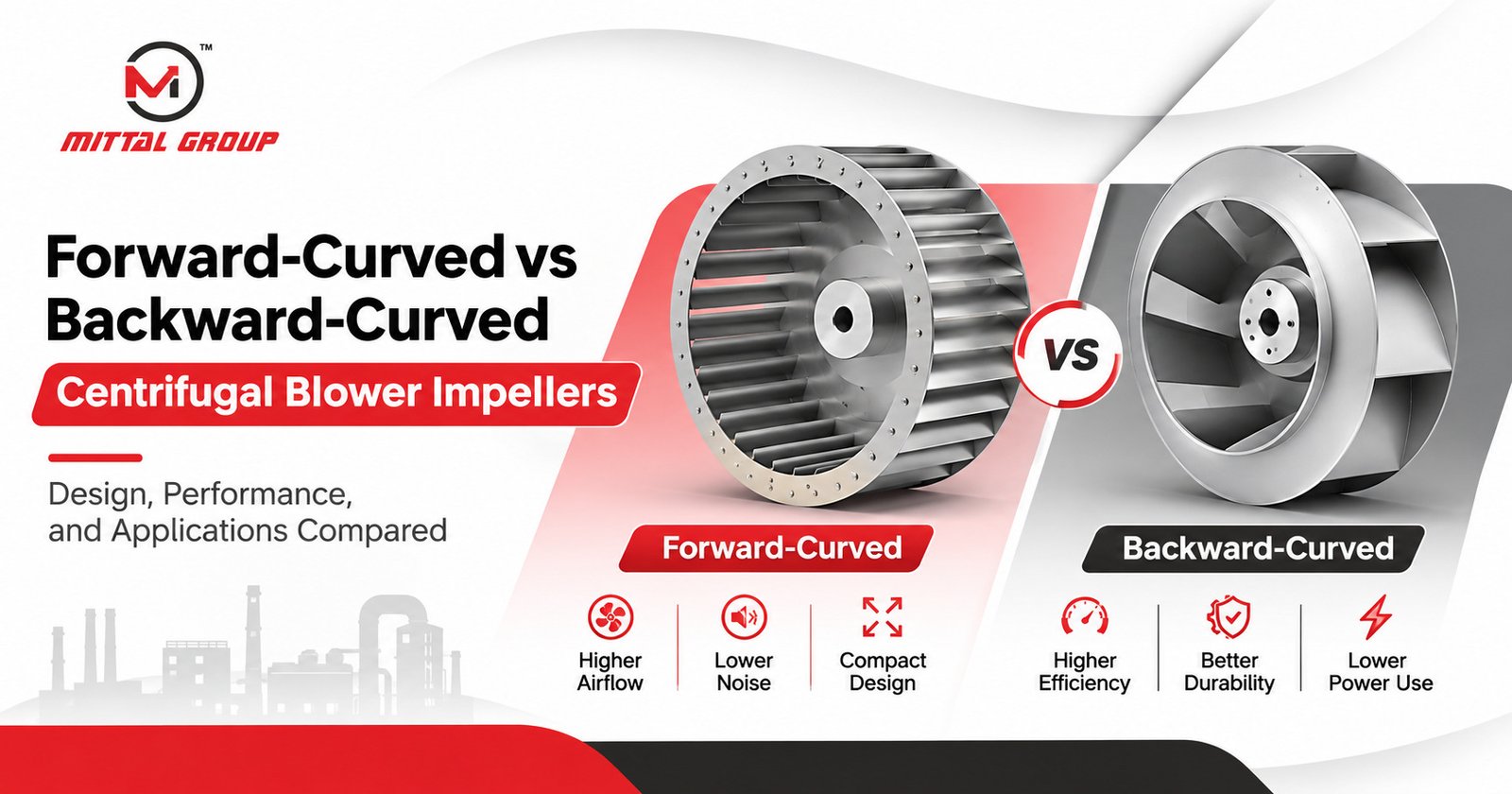
Forward Curved vs Backward Curved Centrifugal Blower Impellers: Which One Should You Choose
A forward curved centrifugal fan moves a large volume of air at low pressure from a small, slow, quiet wheel, which makes it the usual choice for compact HVAC units. A backward curved centrifugal fan runs faster, reaches higher pressure, is typically 15 to 25 percentage points more efficient.
Read article →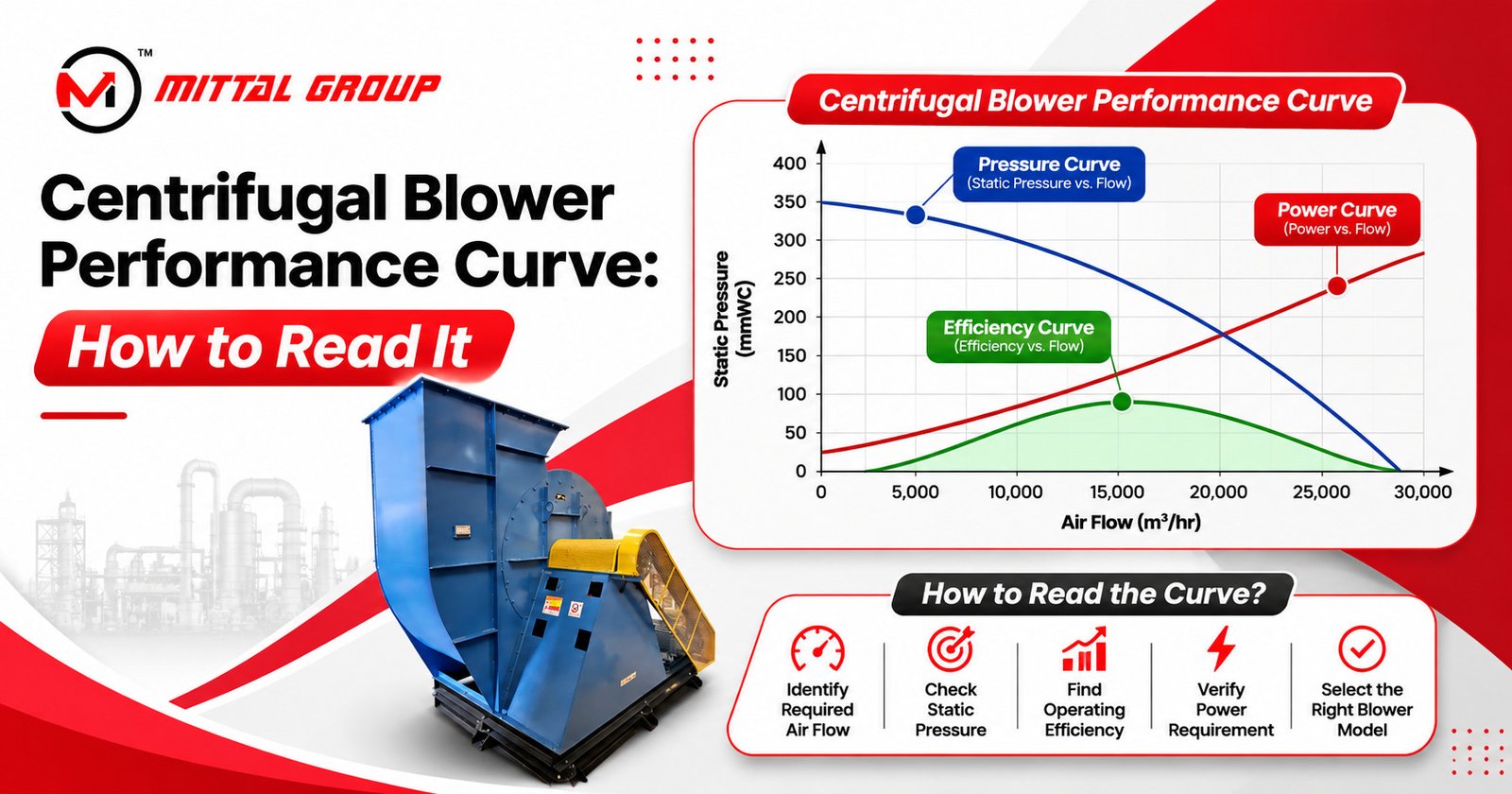
14 November 2026
Centrifugal Blower Performance Curve: How to Read It and Choose the Right Blower
A centrifugal blower performance curve is a graph that shows how much static pressure a blower develops, how much power it absorbs and how efficiently it runs at every airflow, at one fixed speed.
Read article →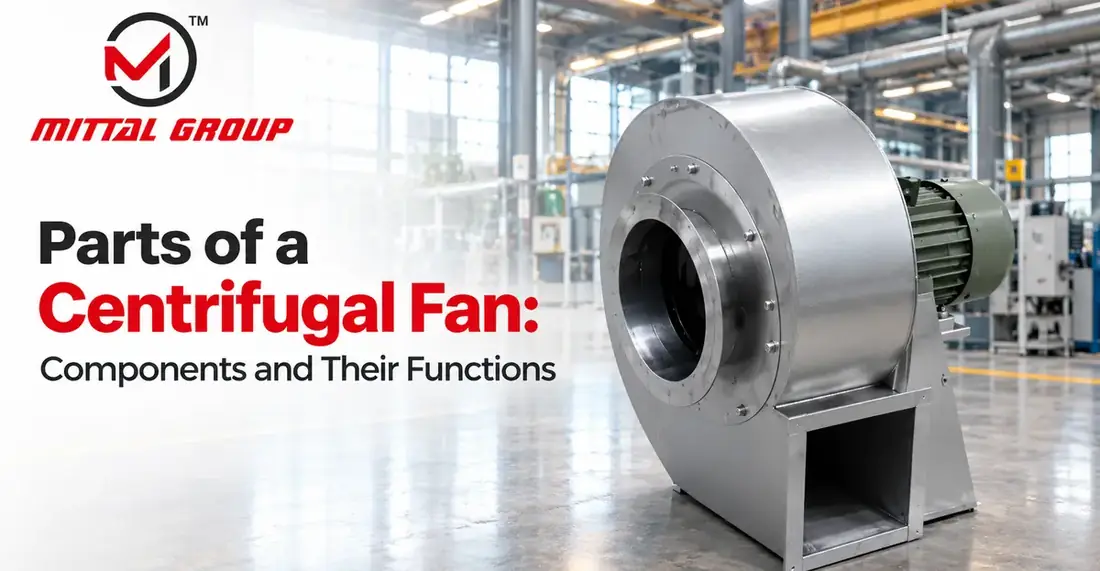
15 October 2026
Parts of a Centrifugal Fan: Components and Their Functions
The main parts of a centrifugal fan are the impeller, volute casing, inlet cone, discharge outlet, shaft, bearings, and the motor with its drive. Air enters the impeller along the shaft. The spinning blades throw it outward, and the…
Read article →
1 October 2026
What Is an Industrial Blower and How Does It Work
An industrial blower is a machine that moves air or gas at a higher pressure than a standard fan. A motor-driven impeller or rotor draws gas in, adds energy to it, and discharges it against system resistance. Under the ASME PTC 11…
Read article →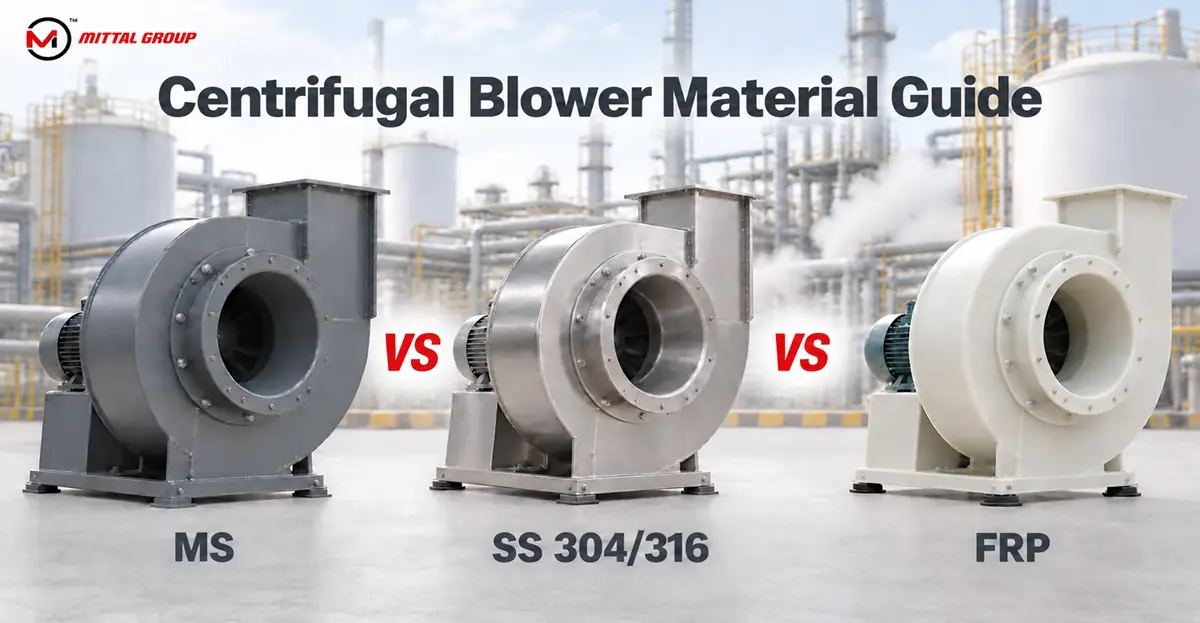
18 September 2026
Centrifugal Blower Material Guide: MS vs SS 304/316 vs FRP for Corrosive Air
MS (with coating or lining) suits dry, dusty or mildly humid air where no acid is present. SS 304 suits humid, food-grade and mildly corrosive air without chlorides. SS 316 / 316L suits chloride-bearing, pharmaceutical and solvent-laden…
Read article →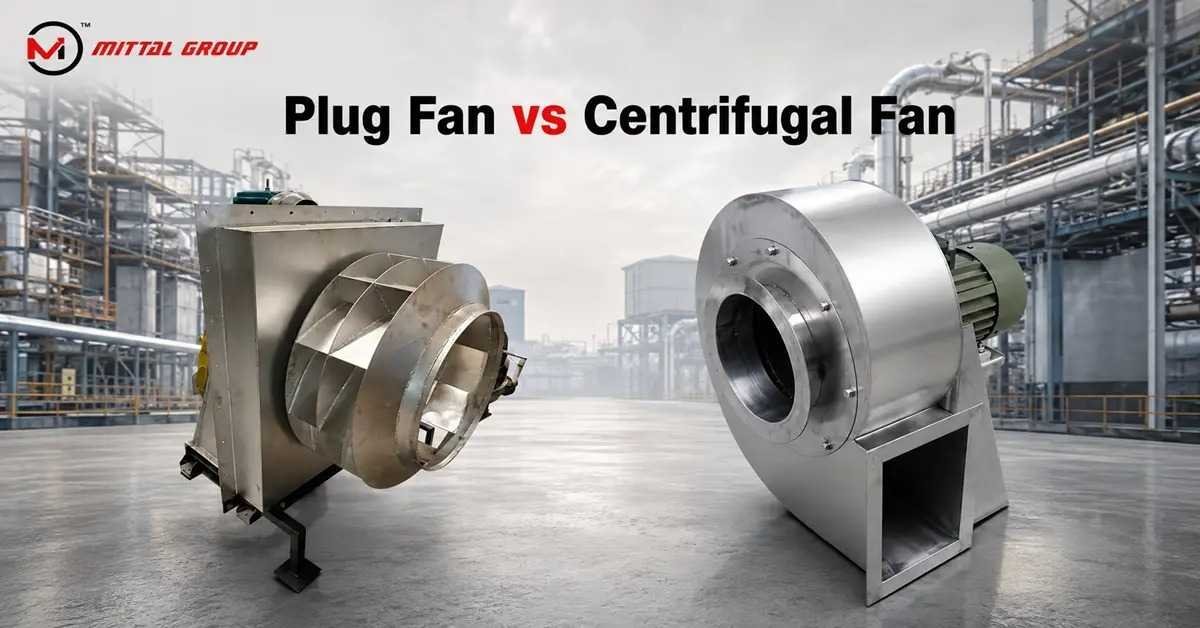
3 September 2026
Plug Fan vs Centrifugal Fan
A plug fan (also called a plenum fan) is a centrifugal fan with a backward-curved impeller and no scroll casing, discharging air into a plenum or AHU. A traditional centrifugal fan uses a scroll housing to direct air toward a defined…
Read article →